
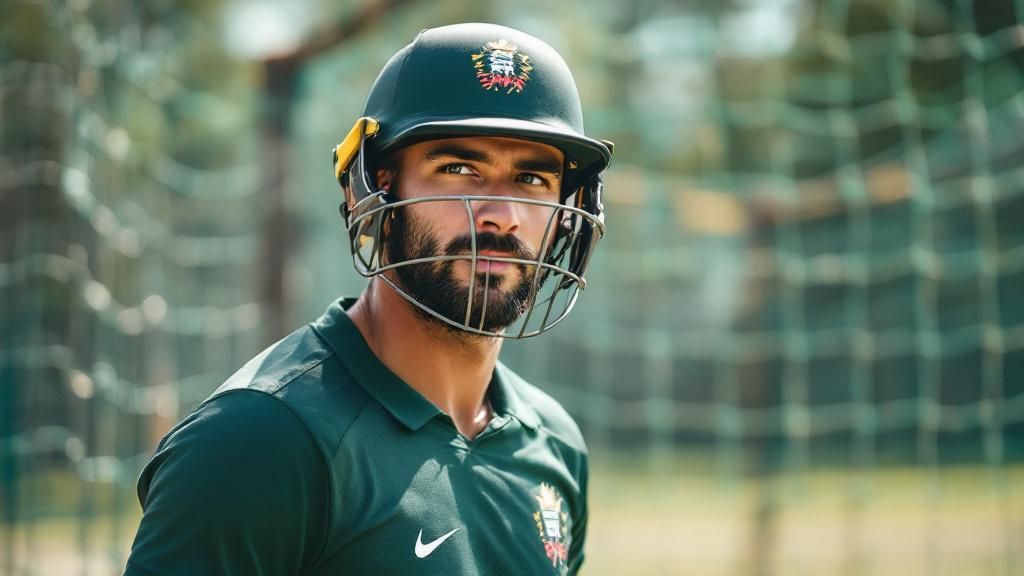
Jonny Bairstow has made a scathing critique of England’s cricket setup, calling that real accountability and accountability be restored to the organisation in the wake of the team’s devastating Ashes defeat this winter. The wicketkeeper, commenting on Monday as the England and Wales Cricket Board confirmed that coach Brendon McCullum, director of cricket Rob Key and Test captain Ben Stokes would remain in their positions, stated that players outside the core selection circle are cast aside. “You require the support back in the game,” the veteran cricketer said. “It is OK saying people care about things – no they don’t. If you are in the system, you are in the system. As soon as you are out of the system, you are out of the system.” Bairstow, who was removed in 2024 and has not featured in Test cricket since March that year, argued the current environment needs the standards needed to maintain players playing at their best.
The Attention Has Disappeared From English Cricket
Bairstow’s concerns extends beyond basic selection decisions, pointing to a widespread problem in how England handles its athlete welfare and progression. He pointed out the situation involving fast bowler Mark Wood, who was selected for the Ashes tour in spite of being absent from the complete English summer following knee surgery, only to get injured after merely one Test match. “He bowls at 95mph and is required to simply arrive without having bowled any overs,” Bairstow stated. “There is no wonder he has been injured. He has not been done right in my opinion.” The wicketkeeper’s observations imply that England’s medical and coaching staff neglected to sufficiently ready players for the pressures of Test cricket, emphasising selection over careful handling.
Bairstow argued that the absence of genuine responsibility within the system generates complacency amongst players who are confident about their positions. “As soon as you don’t have people chasing you you become comfortable,” he said. “When you become comfortable you become complacent, and when someone questions your approach you are not used to it because you are in an environment that is not scrutinising you in a different way.” This assessment is consistent with director of cricket Rob Key’s acknowledgement on Monday that England “prioritised loyalty too highly” throughout the Ashes series, persisting with underperforming batsmen such as Zak Crawley and Ollie Pope rather than giving opportunities to county performers who had merited selection through strong domestic performances.
- Players discarded once excluded from the immediate selection circle
- Inadequate training period for players coming back from an injury layoff
- Lack of open dialogue and responsibility in the setting
- Commitment favoured over ability in squad selection choices
Injury Care and Handling and Player Well-being Issues
The England cricket system’s method for managing injury management proved to be a central concern in Bairstow’s critique, with the recent Ashes tour offering stark evidence of inadequate welfare protocols. A number of pace bowlers experienced collapses throughout the tour, including Mark Wood’s early withdrawal following one Test, highlighting serious doubts about how the medical team and coaches ready performers returning from significant injury layoffs. Bairstow’s observations imply that England favoured broad squad options and consistent selection at the expense of the fundamental principle of guaranteeing athletes were genuinely fit and adequately prepared for the demands of Test cricket at international standard.
The overarching pattern of injury mismanagement reflects what Bairstow identifies as a institutional failing to provide “genuine care” within the England set-up. Players returning from surgical procedures or prolonged time away demand meticulously planned recovery schedules and phased reintroduction into match cricket, yet England’s approach appeared to circumvent these critical procedures. “You have got to be on the park,” Bairstow insisted, indicating that players need ongoing competitive action to develop match fitness and mental toughness. The neglect of these basics properly not only undermines player safety and wellbeing but weakens the team’s overall performance level and consistency during crucial international series.
The Mark Wood Case Study
Fast bowler Mark Wood’s experience during the Ashes tour exemplifies the welfare failures Bairstow noted. Selected for the tour despite missing the entire English summer following knee surgery, Wood managed just one Test before sustaining a further injury with injury. The decision to pick him lacking sufficient preparation time or match conditioning proved detrimental, leaving both player and team worse off. Bairstow showed real sympathy for Wood’s predicament, recognising that the bowler’s outstanding speed and skill made him important but also placed him at greater risk without proper support structures.
Bairstow’s assessment of Wood’s circumstances cuts to the heart of England’s systemic problems. “He bowls at 95mph and is expected to just come in having not come off the back of any overs,” Bairstow stated. “There is no wonder he has got injured. He has not been done right in my opinion.” This candid observation suggests that England’s leadership failed to provide Wood with the carefully planned return to cricket that such a major injury demands. Instead, the system favoured short-term squad needs over long-term player development and welfare, a counterproductive strategy that ultimately damaged both the individual and the team’s Ashes campaign.
Approach to Selection and Questions About Loyalty
England’s method of team selection throughout the Ashes series has faced considerable criticism, with director of cricket Rob Key admitting that the management “placed too much emphasis on loyalty” across the campaign. Rather than making bold changes to tackle continued underperformance, selectors persisted with senior players who were struggling with form, including opening batsman Zak Crawley and wicketkeeper Ollie Pope. This cautious approach meant passing over county cricketers who had shown impressive form at domestic cricket, effectively closing the door on fresh talent and alternative solutions when the team desperately needed them.
Bairstow’s critique goes further than individual selection decisions to underscore the broader cultural issue this strategy generates. When athletes understand their spot is protected irrespective of results, the drive to perform that drives improvement diminishes. “As soon as you don’t have people pushing you up your back side you become comfortable,” Bairstow noted. “When you become comfortable you become indifferent, and when someone scrutinises you directly you are not used to it because you are in an setting that is potentially not questioning you in a distinct fashion.” This lack of genuine accountability undermines the meritocratic principles that should govern top-level sport.
- Zak Crawley and Ollie Pope kept on despite weak performances across the tournament
- County performers overlooked in favour of experienced yet underperforming players
- Lack of competition for places creates self-satisfaction rather than quality
Rebuilding County Cricket Relationships
The gap between England’s Test setup and the county cricket system has become increasingly apparent in recent months. Bairstow’s experience illustrates this broken connection: despite his established credentials as a World Cup and Ashes winner, his exclusion from the international fold cut off his pathway back into contention. County cricketers performing consistently at domestic level found themselves passed over in favour of established players underperforming at Test level, creating a perverse incentive structure that undermines quality at grassroots level. Restoring confidence between the international setup and county cricket requires showing that consistent excellence at county level genuinely merit consideration for Test selection.
The ECB faces a significant issue in rebuilding trust with county clubs and their players. Many skilled players have watched from the sidelines as underperforming Test players retained their places, questioning whether domestic success actually translates into international prospects. This doubt undermines the entire developmental pathway and risks losing emerging players to disillusionment. To change this pattern, England’s selectors must dedicate themselves to genuine merit-based selection, vigorously advancing county performers who exhibit the skill and character required at Test level. Such a change would reinvigorate county cricket as a genuine proving ground rather than a holding pattern.
Yorkshire’s Position on Change
Yorkshire, as one of England’s premier county sides and Bairstow’s home club, has a vested interest in how the national setup treats its players. The county’s solid county-level results have often remained unrecognised at international level, with talented Yorkshire cricketers passed over for established names. This pattern generates discontent within the county system and suggests that county-level success alone no longer guarantees Test consideration. Yorkshire’s leadership has privately expressed concerns about the apparent disconnect between county form and international selection decisions.
Bairstow’s observations hold significant influence given his Yorkshire heritage and his status as one of the county’s most accomplished contemporary players. His experiences connect with current and aspiring Yorkshire cricketers who consider whether excelling at Headingley converts to genuine opportunities at Test level. For county cricket to thrive as a development pathway, the national setup must prove that excellent displays genuinely merit selection. Without such commitment, counties risk becoming mere repositories for Test rejects rather than genuine launchpads for international careers.
Bairstow’s Future Direction and Recall Possibilities
At 36 years old, Bairstow’s chances of returning to Test cricket look decidedly remote, particularly with the present management team remaining in place. His last Test match came in March 2024 in the match versus India, representing the finish of a 100-match international career that delivered four centuries under the Stokes-McCullum era. Despite averaging 36.39 across his Test career, the wicketkeeper’s form deteriorated following his serious leg injury, with his average declining to 31.11 in his final 11 outings. The decision to retain McCullum, Key and Stokes suggests England’s leadership regards Bairstow’s omission as appropriate rather than a blunder warranting reversal.
Nevertheless, Bairstow’s public intervention demonstrates his frustration with a structure he contends has abandoned its primary mission. His willingness to speak candidly about the absence of real concern within the England setup demonstrates a commitment to forcing systemic reform, even if his own return seems improbable. Whether his criticism prompts meaningful reform in how the ECB manages player welfare and selection philosophy remains to be seen. For now, Bairstow’s legacy rests on his achievements rather than any prospect of a storybook comeback to the international arena.
