
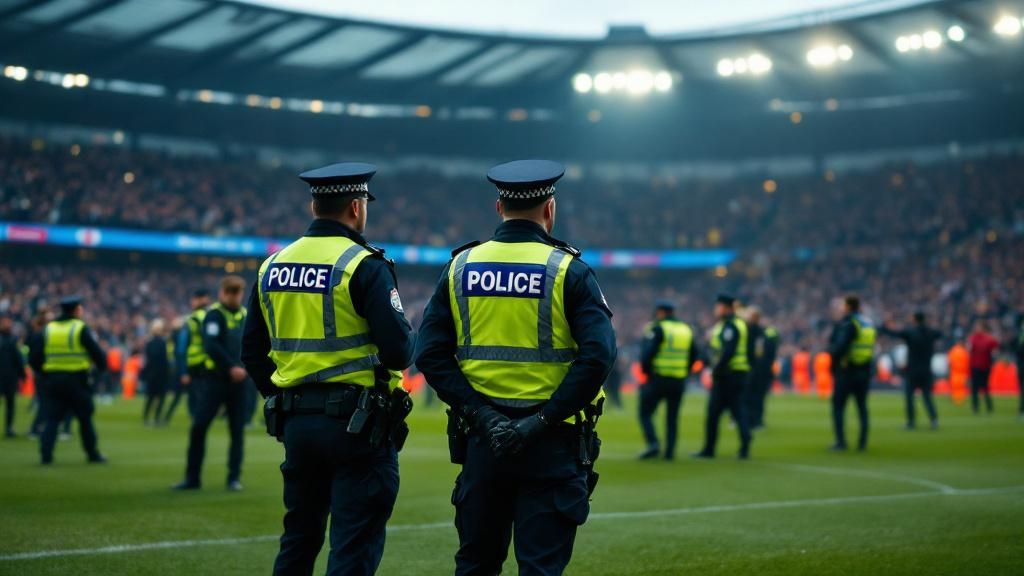
Violence flared up at Ibrox Stadium on Saturday after Celtic supporters invaded the pitch following their 3-2 penalty shootout victory over Rangers in a Scottish Cup quarter-final tie. The disturbing incidents unfolded after 120 minutes of subpar play, as approximately 7,500 Celtic fans poured onto the playing surface at the Broomloan Road end. The pitch invasion triggered a fierce response from Rangers supporters in the Copland Stand, who poured onto the field in large numbers, some wearing masks. The confrontation resulted in scuffles involving Celtic staff and players, including an incident with defender Julian Araujo, while objects and flares were thrown between rival supporters. Police and stewards worked to separate the fans and restore order at the Glasgow venue.
A Match Characterized by Mediocrity and Missed Chances
The 120 minutes leading up to the pitch invasion were characterized by an extraordinary lack of quality from both teams. Celtic’s journey to the Scottish Cup semifinals was built on the most unstable foundation — they produced only one attempt on target throughout the entire match and missed out on a single strike that threatened the goalkeeper. In spite of their own significant shortcomings and defensive lapses, Celtic somehow survived the ordeal, finally triumphing in the shootout when Tomas Cvancara beat Jack Butland. Rangers, on the other hand, were branded as “an abomination,” unable to capitalize on Celtic’s vulnerabilities or establish control on proceedings.
The match was marked by an comprehensive array of football’s poorest practices: poor passing, crosses sailing wide, squandered set pieces, persistent lack of precision, and an overwhelming reliance on direct play and high balls rather than structured football. Both teams were unable to build any steady pattern or clear ability, with disciplinary issues increasing and strategic focus deteriorating. The standard of play was so poor that it seemed entirely appropriate that such an disappointing game would end in the chaos and ugliness of the post-match scenes rather than any instance of genuine sporting excellence.
- Blocks, wayward distribution, and crosses flying out of play dominated proceedings
- Free-kicks wasted and aerial duels replaced organized, disciplined football play
- Celtic’s sole shot on goal came with no shots on target
- Rangers couldn’t take advantage given Celtic’s defensive weaknesses throughout the match
Penalty Controversy and the Moment Everything Changed
After 120 minutes of exhausting, sloppy football, the match inexorably progressed to a penalty shootout. Both teams had missed opportunities throughout the day, and neither had convincingly demonstrated they deserved to advance. The tension mounted as each side stepped up to attempt penalties, with Jack Butland defending for Rangers and the semi-finals. The Rangers keeper had been mostly unimpactful throughout the match, and as the penalties progressed, his lack of a decisive contribution became more evident. Celtic’s squad members approached the spot with a combination of determination and desperation, understanding that one finished attempt could ignite scenes of jubilation.
The pivotal moment came when Tomas Cvancara moved forward to take his penalty. With the pressure mounting and both teams having converted their previous attempts, Cvancara’s shot found the back of the net, beating Butland and propelling Celtic through to the Scottish Cup semi-finals. It was a moment that should have been one of genuine joy and relief — the culmination of a fiercely battled, if thoroughly dull, contest. Instead, this moment of athletic triumph turned into the prelude to something considerably darker, as Celtic supporters’ jubilation would rapidly escalate into scenes of unrest and brutality that would overshadow any sense of achievement.
The Game-Winning Basket That Sparked Chaos
The successful conversion was the official end of the match, but it served as the starting gun for the chaos that followed. As the ball struck the net, Celtic’s away fans — approximately 7,500 strong at the Broomloan Road end — burst into celebration. However, their joy quickly manifested in a decision that would become disastrous: a crowd surge onto the pitch. Supporters streamed onto the field, singing, cheering, and celebrating their team’s advancement. What might have seemed like innocent enthusiasm constituted a significant breach of stadium protocol and a dangerous escalation that authorities had hoped to prevent through modern safety measures and crowd management strategies.
The pitch invasion swiftly changed the atmosphere at Ibrox from one of athletic letdown to one of authentic threat. The Rangers supporters in the Copland Stand watched as their rivals rejoiced on the turf, and what began as a modest number of Rangers fans vowing retaliation quickly escalated into something substantially more grave. The presence of numerous Celtic supporters on the pitch, paired with the inflammatory nature of their celebration, created a volatile environment. The Rangers dam, as one observer noted, ruptured entirely, with large numbers of home supporters responding to what they perceived as a inflammatory invasion into their territory, setting the stage for the violent confrontations that would follow.
Pandemonium Breaks Out as Fans Rush into the Playing Area
What commenced as a celebratory entry onto the pitch quickly escalated into displays of violence and disorder that would define the aftermath of the Old Firm Cup match. As supporters of Celtic flooded onto the field, Rangers fans initially remained restrained, but the appearance of rival supporters celebrating and dancing on their home pitch proved impossible to tolerate. The Rangers fans in the Copland Stand section, observing what they perceived as an act of provocation, began streaming onto the pitch in ever-growing numbers. Many had masks on, their faces hidden as they advanced with apparent purpose toward Celtic staff members and players. The police and stewards, despite their best efforts to keep order, became overwhelmed by the sheer scale and speed of the invasion, incapable of preventing the dangerous convergence of rival supporters that was now taking place.
The scenes at Ibrox illustrated a concerning decline to pre-2018 standards of fan behavior, when such pitch invasions and ensuing confrontations were increasingly frequent. The decision to extend the quota for opposing supporters to 7,500 had been undertaken with good intentions, based on assumptions about contemporary supporter behavior and strengthened safety procedures. Yet the incidents that day exposed the vulnerability of those expectations and raised serious questions about ground protection and fan management approaches. As projectiles started sailing across the pitch — notably a flare thrown from Rangers supporters toward the Celtic section — it grew evident that the situation had escalated past the management of officials, with the distinct likelihood of a full-scale confrontation between opposing supporters becoming increasingly imminent.
- Rangers supporters flooded the pitch in large, menacing numbers from the Copland Stand
- Many Rangers fans donned face coverings, concealing their identities as they advanced toward Celtic personnel
- Celtic staff attempted to prevent incidents and guide players away from high-risk areas
- Missiles such as flares were thrown between opposing supporter sections across the pitch
- Police and stewards struggled to contain the disturbance and divide the rival groups
Confrontations and Growing Tensions
The most concerning moment came when a Rangers supporter confronted a member of the Celtic backroom staff, leading to a physical altercation that left observers seriously worried. Celtic manager Martin O’Neill later explained that his staff member had been trying to stop an incident from spiraling when he was forced down by stewards and police. The exact nature and severity of the contact was unclear, but the image of a visiting coach being forcibly held by security personnel in such circumstances was shocking and deeply worrying. Shortly after this incident, another Rangers fan or group of fans confronted Julian Araujo, the Celtic full-back, in what appeared to be another bid to confront the visiting team.
O’Neill’s reaction to Araujo’s involvement in the confrontation — guiding the player away with obvious concern evident across his face — underscored the genuine danger that the situation had reached. For a brief, frightening moment, it appeared possible that the rival fan groups would establish direct contact with one another, potentially resulting in large-scale violence across the pitch. Mercifully, this worst-case outcome was averted, though only through the determined efforts of police and stewards who succeeded in maintaining a physical barrier between the two groups. The incident functioned as a stark reminder of the risks inherent in allowing significant numbers of away supporters into hostile environments, especially when emotions are running high following an emotionally intense contest.
Questions Regarding Safety Measures and Visiting Supporter Allocations
The violence after the match at Ibrox has reignited serious questions about the prudence of raising away fan allocations at Old Firm derbies. With 7,500 Celtic supporters present, the match represented a return to attendance figures from before 2018 for away supporters — a policy decision that now seems increasingly problematic in light of the day’s events. Observers have questioned whether extending these numbers was prudent, particularly given the inherent tensions that define fixtures between Rangers and Celtic. The clear risks presented by such large visiting contingents in a unwelcoming atmosphere, combined with what some view as misguided confidence in fan behavior, have become impossible to ignore following the scenes that unfolded at the Broomloan Road end.
The logic behind permitting larger away allocations seems fundamentally flawed when weighed against the safety threats demonstrated on game day. Police and stewards were pushed to capacity attempting to manage the disorder, and it required significant resources to prevent opposing fan bases from engaging in physical confrontations. The incident raises uncomfortable questions about whether Scottish football’s governing bodies have properly assessed the implications of their ticket distribution choices, and whether the desire to accommodate more visiting fans has been placed over legitimate security worries. Stakeholders must now confront whether this policy constitutes an acceptable risk or whether enhanced security measures must be reintroduced.
| Concern | Impact |
|---|---|
| Increased away fan numbers creating hostile environment | Greater likelihood of confrontations and pitch invasions |
| Inadequate police and steward resources | Difficulty containing violence and separating rival groups |
| Masked supporters obscuring identities | Reduced accountability and emboldened aggressive behavior |
Scottish football governing bodies are under increasing pressure to examine their methods to away fan quotas at Old Firm matches. The occurrences of March 8th have revealed that the current system might be severely compromised, with protective arrangements failing to accommodate significant numbers of visiting fans in such a volatile atmosphere. A detailed examination of security measures, distribution figures, and implementation procedures is pressing and vital to stop such events from taking place in subsequent games.
What The Future Holds for Football in Scotland
The disorder that undermined Celtic’s penalty victory has catapulted Scottish football into a critical juncture. Football officials and club officials must now address tough choices about how Old Firm fixtures are administered in the future. The incident at Ibrox has revealed core deficiencies in current safety protocols, compelling stakeholders to weigh the commercial benefits of increased away allocations versus the genuine risks shown on game day. Whether authorities respond with genuine improvements or maintain the current approach will define the sport’s commitment to fan safety.
Celtic boss Martin O’Neill’s carefully considered statement—acknowledging the staff worker’s effort to stop additional disturbance—offers a glimmer of perspective amid the chaos. However, his words cannot obscure the disturbing truth that field encroachments have returned to Scottish football following a period of comparative peace. The existence of masked supporters, the hurling of missiles, and the near-confrontation between rival fan groups all point to a fixture that requires immediate action. Without swift action, the risk of heightened aggression at upcoming Old Firm matches remains dangerously high.
- Review and potentially cut away fan allocations at hostile venues
- Strengthen training for police and stewards for addressing major attendance scenarios
- Establish stricter identity verification and mask mandates
- Create more defined penalties for pitch invasions and fan misbehavior
