
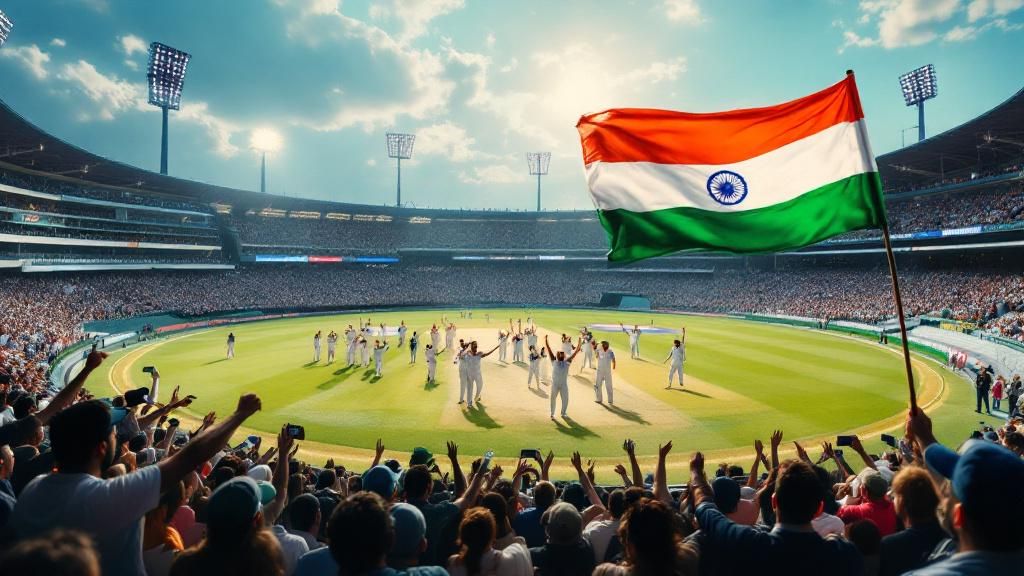
India has solidified its status as the dominant force in white-ball cricket, securing its third consecutive major tournament victory in the T20 World Cup. The triumph underscores a remarkable period of supremacy that has left rival nations unable to compete the Indian juggernaut. With this latest tournament success, India has demonstrated not only exceptional skill and consistency across multiple formats but also a wealth of players and tactical expertise that appears to be distinguishing them from the rest of the cricketing world. The victory raises urgent questions for competing nations about what it will require to match India’s seemingly insurmountable lead in the shorter formats of the game.
Escaping the Weight of Pressure
India’s skill in executing under immense pressure has become a signature trait of their limited-overs supremacy. In high-stakes tournament cricket, where emotions often shape outcomes, the Indian team has consistently shown composure and mental resilience that their competitors have struggled to match. Their players seem to thrive in elimination matches, converting pressure into performance with a consistency that suggests a greater grasp of tournament dynamics. This psychological edge, paired with their technical excellence, has become a strong amalgamation that rival teams consider extremely difficult to defeat.
The Indian team’s achievements in pressure situations extends beyond personal excellence to a team mentality built through rigorous preparation and practical exposure. Their coaching team has introduced strategies that focus on mental conditioning combined with fitness work, creating a culture where athletes accept rather than dread crucial moments. This method has been particularly effective in T20 cricket, where matches are decided in tightly contested finishes. As other nations keep studying India’s success blueprint, they are finding that replicating this mental fortitude may be of equal importance as matching their match performance.
- Consistent performance in knockout matches and championship matches
- Robust psychological training and mental readiness initiatives
- Experience-driven decision-making processes in high-pressure scenarios
- Organizational culture that welcomes rather than avoids pivotal occasions
A Team Built on Shared Capabilities
India’s white-ball excellence cannot be attributed to any single player or moment, but rather to a carefully constructed team structure where every member recognizes their role and performs it with precision. The squad displays remarkable balance across batting, fielding, and bowling departments, with each player contributing meaningfully to the shared achievement. This focus on collaboration over individual stardom has created an environment where players are prepared to take personal sacrifices for the greater good, a philosophy that has become less common in modern cricket where individual achievements often take precedence.
The breadth of India’s talent pool is perhaps their most significant strategic advantage. Unlike many rival countries that depend significantly on a handful of star performers, India has developed multiple world-class players in each position, allowing for strategic and tactical rotation without compromising quality. This surplus of talent means that setbacks or dips in performance by key players rarely derail their campaigns. The reserve depth is so formidable that players excluded from selection would secure spots in most other national squads as leading performers, creating strong internal competition that consistently raises standards across the whole organization.
Management Without Charisma
India’s management approach has moved beyond the conventional approach of commanding leaders who control all decisions. Instead, the current setup prioritizes collaborative leadership where the captain, coach, and senior players function as a cohesive decision-making body. This distributed approach to decision-making has shown considerable effectiveness, as it leverages the combined experience of seasoned team members while ensuring clear accountability and direction. The captain acts as a coordinator rather than a sole decision-maker, enabling perspectives from specialists in multiple facets of the sport.
This method of leadership has cultivated an atmosphere of mutual trust and collective accountability within the team. Players feel empowered to contribute ideas and assume responsibility of their performances, knowing that choices are reached as a group rather than dictated from the top. Such an strategy lessens tension and resentment that can arise from perceived favoritism or subjective decision-making. The emphasis on collaborative decision-making, while demanding of time, has established a unified team where even squad members on the sidelines stay committed in team success rather than harboring grievances.
- Collaborative decision-making including captain, coach, and senior players
- Focus on collective accountability and collective responsibility throughout the squad
- Support for players to offer tactical insights and ideas
- Building of open culture where reserve players stay fully engaged
The IPL Factory and Financial Advantage
The Indian Premier League has transformed into an unmatched talent cultivation factory, providing India’s white-ball players with a competitive environment that rivals international cricket in intensity and quality. The IPL’s franchise structure introduces Indian cricketers to different playing environments, diverse opponents, and intense competitions during the season, creating a constant loop of skill enhancement and refinement. Players play for multiple franchises, experiencing various coaching philosophies and tactical approaches that broaden their cricket understanding. This domestic competition has effectively produced a pressure-cooker environment where only the most adaptable and skilled players excel, naturally filtering the player base and ensuring that only the best compete at international standard.
Beyond player development, the IPL’s monetary power has allowed the BCCI to commit significant resources in facilities for infrastructure, coaching, and sports science that rival any cricketing nation. The tournament generates enormous revenues that subsidize grassroots programs, talent identification initiatives, and elite training facilities across the country. This financial superiority permits India to hire specialized coaching staff for different match formats, develop advanced data analytics capabilities, and supply competitors with resources for recovery and injury prevention that many other nations lack the means to provide. The wealth produced by the IPL has developed a self-perpetuating cycle where revenue growth converts into performance superiority on the field.
| Achievement | Timeline | Impact |
|---|---|---|
| T20 World Cup Victory | 2024 | Established India as dominant white-ball force |
| ODI World Cup Success | 2023 | Demonstrated consistency across multiple formats |
| IPL Expansion | 2022-2026 | Enhanced player development and revenue generation |
| Third Consecutive Trophy | 2026 | Proved sustained dominance over competing nations |
Can Anyone Catch India Now
India’s third straight white-ball trophy win has fundamentally shifted the landscape of international cricket, raising uncomfortable questions about whether any country can genuinely compete with their supremacy in the near future. The gap between India and the rest of the world has widened considerably, with their blend of consistent performances, strategic planning, and squad strength creating a fortress that appears increasingly difficult to breach. Other cricket-playing nations are watching helplessly as India continues to set new benchmarks, causing analysts and rival teams scrambling to identify what changes might level the playing field or at least reduce the gulf.
The psychological effect of India’s dominance should not be underestimated. Back-to-back tournament successes have developed a culture of victory within the Indian squad, where success stems from confidence and performance is driven by expectations to unprecedented standards. Meanwhile, other countries face the difficult challenge of not merely claiming titles, but defeating an opponent that has mastered the art of ODI and T20 formats. This psychological edge, paired with their tactical excellence and greater financial backing, creates a powerful obstacle that goes well past statistical analysis or strategic factors.
The Future Outlook for Rivals
For other cricket nations, the path forward necessitates major overhaul of their domestic competitions and player development systems. Countries must allocate considerable funding in establishing home competitions that replicate the intensity and commercial viability of the IPL, producing revenue streams and match experience for their players. Without equivalent venues for consistent competitive matches, developing nations will continue to fall behind in player preparation and tactical innovation. The funding needed is significant, but the alternative is permanent relegation to second-tier standing in limited-overs cricket.
International cricket boards confront mounting pressure to speed up talent identification and implement increasingly advanced training approaches. Hiring world-class coaching personnel, allocating funds toward sports science and analytics, and creating specialized training centers for specific formats have proven essential rather than optional. Teams must also emphasize consistency in selection strategy, preventing the constant tactical adjustments that disrupt continuity. The challenge is not merely matching India’s current level, but predicting and preparing for their sustained innovation and advancement in white-ball cricket.
- Establish domestic T20 leagues aligned with IPL’s commercial scale
- Fund specialized coaching, sports science, and data analytics systems
- Implement sustained player scouting and player development initiatives
- Promote sustained strategic focus over various tournament periods
