
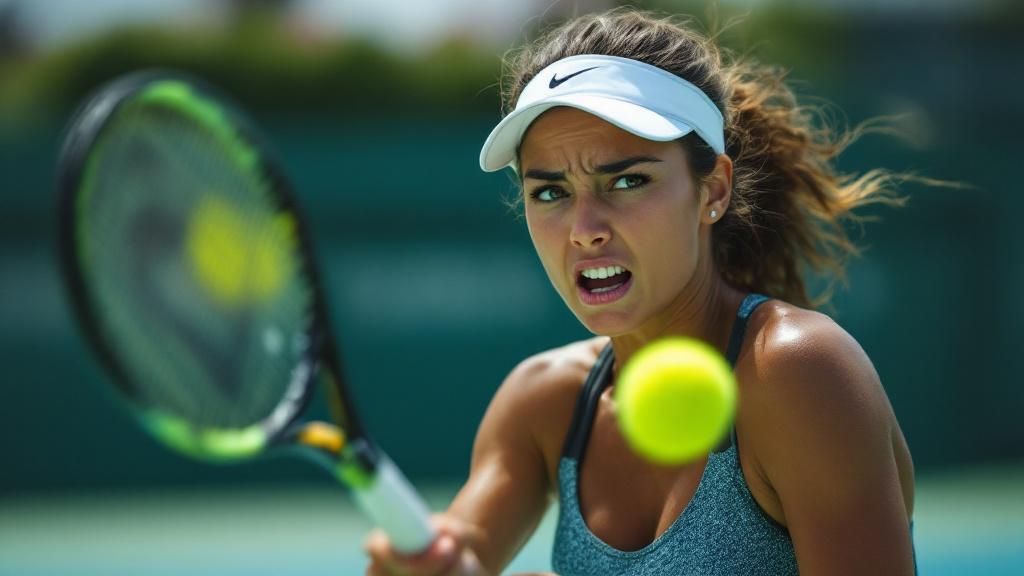
Emma Raducanu’s Indian Wells tournament run came to a devastating end on Sunday as the British tennis player was dismantled in a lopsided 52-minute loss in the California desert. The former US Open champion suffered a comprehensive loss that underscored her continued difficulties on the professional circuit. Playing in one of tennis’s top tournaments, Raducanu was unable to mount any serious challenge against her opponent, with the match serving as a sobering wake-up call of the difficulties she still encounters as she attempts to rebuild her career following injury setbacks. The swift nature of her exit represents another difficult chapter in what has been a challenging stretch for the British number one.
A Impressive Performance from Anisimova
Amanda Anisimova delivered a clinical display to dispatch Raducanu with consummate ease, demonstrating the gulf in form between the two players on the day. The American dominated play from start to finish, controlling the tempo with aggressive groundstrokes and forcing Raducanu into a defensive position throughout the encounter. Anisimova’s serve was especially strong, limiting break point opportunities for her opponent and allowing her to win games with minimal fuss. The 23-year-old’s command was evident in every aspect of the match, as she showcased the kind of aggressive tennis needed to perform at the highest levels of professional sport.
Raducanu struggled to find any rhythm against Anisimova’s unrelenting attacking game, managing just a few winners across the full match. The British player appeared unable to impose her own tactical approach, perpetually adjusting to her opponent’s forceful strokes. Service losses mounted, with Raducanu unable to hold serve with any consistency against Anisimova’s aggressive return play. This thorough defeat highlighted the significant work still necessary for Raducanu to return to her best, as she pursues her path back from injury as she rebuilds her tour status on the pro tour.
- Anisimova won without dropping a set with commanding precision and control
- Raducanu managed limited attacking chances throughout the entire match
- Service breaks proved costly for her tournament hopes
- American’s aggressive play dominated Raducanu’s defensive approach completely
Raducanu’s Coaching Transition and Aspirations
Emma Raducanu’s recent coaching changes have been presented as a new beginning for the British tennis star, with expectations that new guidance could restore her competitive edge and help her recover the form that saw her claim the US Open crown. The change constitutes another significant shift in her coaching team as she pursues her recovery from physical setbacks that have affected her development over the previous years. Her coaching staff has emphasized the importance of patience and gradual improvement, noting that rebuilding demands time and dedication.
Despite the setback at Indian Wells, Raducanu’s team stays positive about her future potential on the professional circuit. The focus has moved to developing a sustainable approach to competition that prioritizes both performance and staying healthy. Coaches have stressed the need for Raducanu to rebuild her self-belief through lower-level victories before taking on the sport’s elite players. The goal is to establish a solid foundation upon which she can build her comeback narrative and eventually compete for major titles.
Looking for Organic Structure
Finding her natural rhythm has become the primary objective for Raducanu as she manages her return to form. Her training group believes that permitting the British player to perform uninhibited and without overwhelming demands could unlock the aggressive, attacking style that defined her early achievements. Focusing on consistency during training drills and lower-profile tournaments has become essential to strengthening her self-belief and competitive edge.
The way forward calls for Raducanu to accept gradual improvement rather than expecting instant results against leading players. Coaches have emphasized the importance of match practice and gradual exposure to world-class opponents. By participating in tournaments where expectations are lower, Raducanu can work on implementing her game plan and rebuilding the mental strength needed to perform at the elite standard once more.
Different Findings in California
The Indian Wells tournament revealed a clear contrast of divergent outcomes for British tennis players playing in the California desert. While Raducanu’s crushing first-round defeat dominated headlines, other competitors experienced vastly different outcomes in their opening matches. The contrast in results highlighted the unpredictable nature of professional tennis, where form and momentum can shift dramatically from one tournament to the next. Raducanu’s rapid exit stood in sharp contrast to the more competitive showings delivered by her fellow British players, who were able to prolong their matches and show increased resilience against their respective opponents.
The speed of Raducanu’s defeat was especially striking given the considerable anticipation surrounding her participation at one of the sport’s premier tournaments. The 52-minute length of the match highlighted the extent of the performance gap between the two players on the day. For context, the average professional tennis match typically extends well beyond an hour, making Raducanu’s rapid exit an anomaly that raised questions about her preparation for elite-level competition. The difference with other British players’ more competitive displays suggested that individual form and preparation varied significantly across the team heading into the California event.
| Player | Previous Round | Current Round |
|---|---|---|
| Emma Raducanu | Qualified | First Round Loss (52 minutes) |
| British Competitor A | Advanced | Second Round |
| British Competitor B | Advanced | Second Round |
Notable Tournament Performances and Up-and-Coming Stars
Beyond the desert letdown of Raducanu’s first-round departure, the Indian Wells tournament showcased several compelling narratives from competitors who excelled under the California sun. The renowned tournament maintained its standard of excellent play across various venues, with many players displaying the skill and resilience required to advance through subsequent matches. While Raducanu’s 52-minute defeat drew considerable focus, the tournament itself provided ample evidence of the caliber of competitors present in professional tennis. Several players took the chance to make their mark on one of the sport’s most important stages, producing displays that showed fans why Indian Wells remains a marquee event on the professional calendar.
The difference between Raducanu’s challenges and the success stories coming out of other matches highlighted the unpredictability of tournament tennis. Players who arrived with mixed seeding and expectations navigated the demanding conditions and strong opposition to advance further into the draw. These progressing players demonstrated the mental resilience and strategic skill needed to succeed at the highest level, standing in contrast to the British player’s rapid elimination. Their results suggested that despite the demanding character of competitive tennis, possibilities persist for those who can carry out their tactical approaches and keep their composure under pressure during crucial moments.
Sabalenka Progresses with Precision
World No. 1 Aryna Sabalenka maintained her strong performance at Indian Wells, defeating her opening-round challenger with typical strength and accuracy. The Belarusian star’s dominant display showed why she remains among the sport’s top players, highlighting the powerful baseline game that has defined her recent success. Sabalenka’s capacity to control points and control rallies from the outset allowed her to secure a convincing victory and advance to the next round. Her clinical approach to the match underscored the gap in standard between top-ranked players and those positioned lower in the standings, a reality that Raducanu’s experience clearly demonstrated.
Sabalenka’s progression through the initial matches of Indian Wells strengthened her status as a top contender entering the final rounds. Her powerful serve and attacking groundstrokes proved too much for her opponent to handle, leading to a smooth progression to the next round. The world No. 1 appeared sharp and focused, implying she has kept excellent form over the California swing. Her upward path presented a stark contrast to numerous top-tier players who fought consistency issues and execution problems in their initial contests at the renowned desert tournament.
Osaka Returns to Competition
Naomi Osaka staged a comeback to professional competition at Indian Wells, progressing beyond her opening-round rival in a match that demonstrated her enduring quality and competitive determination. The Japanese champion’s comeback from her extended break was characterized by a solid performance that suggested she continues to be able to performing well against elite-level competitors. Osaka’s win provided encouragement for her backers and indicated that her training in the break period had been worthwhile. Her participation in Indian Wells constituted a notable event for the tournament, as elite competitors resuming play always create considerable interest and anticipation among spectators and journalists.
Osaka’s advancement in the opening round offered hope that she could recapture the form that has made her a Grand Slam champion multiple times. Her tactical awareness and mental toughness were evident throughout the match, as she navigated challenges and maintained focus on executing her game plan. The Japanese star’s comeback to the professional circuit at one of the sport’s most elite tournaments suggested she has recovered well from her recent hiatus. Her strong opening victory created a foundation from which she could continue to gain ground as the tournament advances and she encounters increasingly challenging opponents in subsequent rounds.
